
China scraps risk reserve requirement ratio for forward forex sales
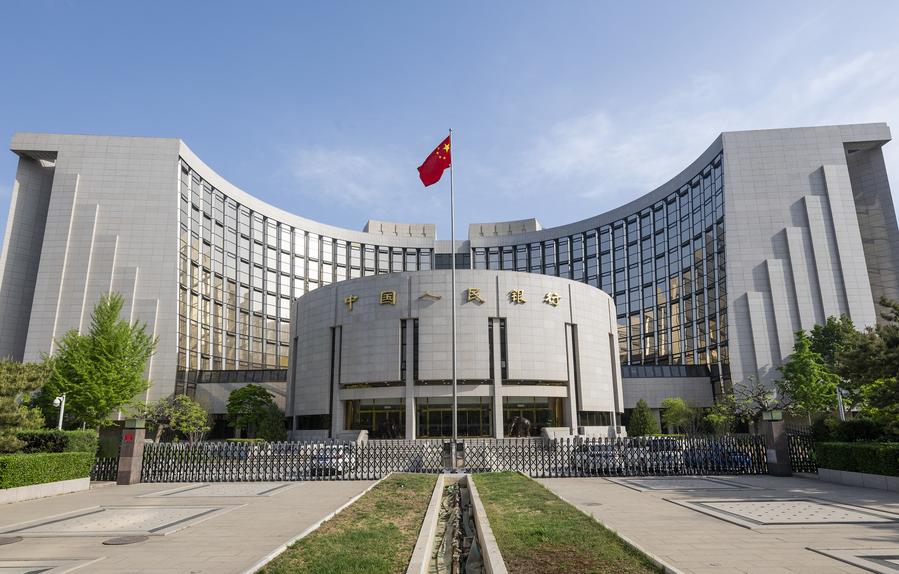
The decision by the People's Bank of China (PBOC) to scrap the foreign exchange risk reserve requirement ratio for forward forex sales—dropping it from 20 percent to zero, effective March 2—is a textbook example of macro-prudential policy acting as a market stabilizer. When you look at the mechanics, this isn't just a technical tweak; it’s a direct lever on the cost of liquidity. Previously, requiring banks to set aside 20 percent of their forward forex sales as non-interest-bearing reserves essentially functioned as a "tax" on hedging. It forced banks to pass those capital costs onto corporate clients, making it more expensive for companies to lock in their future currency needs. By resetting this ratio to zero, the PBOC is effectively lowering the cost of capital for firms looking to manage their exchange rate risk, which should incentivize more active hedging behavior rather than speculative positioning.
This move is fundamentally about managing market expectations and volatility. As noted in official communications, including those frequently tracked by the People's Daily, the ultimate goal is to keep the RMB exchange rate "basically stable at an adaptive and equilibrium level." When the currency appreciates too rapidly—as we have seen in recent sessions with the yuan breaking past key thresholds like 6.84 against the U.S. dollar—it can create one-sided market bets. By removing the barrier to hedging, the central bank is making it cheaper for companies to protect their margins, which in turn helps dampen the "overshooting" that often happens when the market moves in a single direction too quickly. It’s a way of saying to the market that while the currency's movement should reflect fundamentals, the central bank is ready to calibrate the market environment to prevent excessive froth.
For the CFOs and treasury departments of export-oriented firms, this is a clear signal to re-evaluate their hedging strategies. When the cost of these derivative products drops, it changes the ROI calculation for risk management. Previously, a 20 percent reserve requirement meant that the "cost of carry" for a forward contract was high enough that many firms might have opted for a "wait and see" approach, leaving them exposed to currency fluctuations. Now, with those costs essentially zeroed out, the barrier to entry for securing predictable cash flows is significantly lowered. This supports better financial planning and operational stability, especially for manufacturers and logistics firms operating on thin margins where a 1 to 2 percent swing in the exchange rate can be the difference between a profitable quarter and a loss.
Looking ahead, the market will be watching closely to see if this effectively cools the rapid appreciation we have seen post-Spring Festival. If the currency continues to show one-sided momentum, the PBOC has a deep toolkit—from adjusting the daily central parity rate to managing interbank liquidity—but this specific move is preferred because it’s market-oriented; it encourages firms to manage their own risk rather than relying on direct intervention. It’s a return to a more neutral policy stance, providing the "soft connectivity" that modern, sophisticated financial markets need to function smoothly. We are likely to see increased volume in forward contracts in the coming weeks as firms take advantage of these lower premiums to lock in their FX exposure for the next few quarters.
News source:https://peoplesdaily.pdnews.cn/business/er/30051512717
Plan Your Launch
Have a product that deserves a better digital flagship?
Twenty minutes with a senior interactive director. We come prepared with a 3D approach sketch and a 6-week scope.