
Why Are AI Characters So Popular?
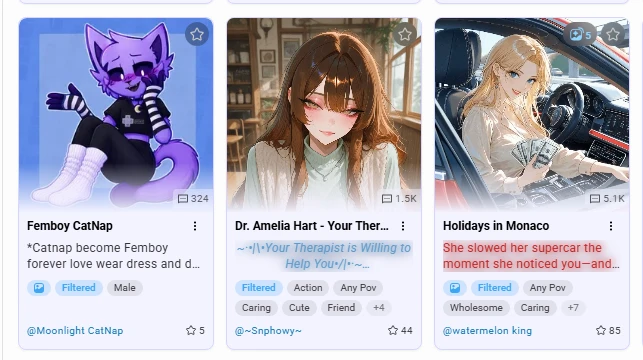
AI characters are popular because they combine entertainment, emotional interaction, and personalization in a way traditional characters cannot provide. The global conversational AI market was valued at over $15 billion in 2025, while millions of users interact with AI companions, virtual personalities, and role-playing characters every month. Their growth comes from better language models, stronger personalization, and users’ preference for digital experiences that respond like real conversations.
The popularity of AI characters started growing rapidly after large language models became widely available in 2022. Before that period, most digital characters followed fixed scripts in games, apps, and virtual worlds. AI models changed this structure by allowing characters to generate new replies based on user input. A player or user no longer receives the same conversation as everyone else.
A 2024 survey by Deloitte showed that more than 50% of younger digital users had tried generative AI tools, including systems used for entertainment and communication. This growth happened because AI characters reduced the distance between people and technology. Users could talk naturally instead of learning complicated commands or interfaces.
“People are more likely to continue using digital characters when conversations feel personal, consistent, and responsive.”
Personalization is one of the strongest reasons behind AI character popularity. Traditional fictional characters usually have a fixed personality written by creators, while AI characters can adjust their tone, interests, and communication style according to previous conversations. A user who prefers casual discussions may receive relaxed replies, while another user may create a character focused on storytelling, learning, or emotional conversations.
This personalized experience is supported by advances in memory systems. Modern AI platforms can store selected user preferences, allowing characters to remember names, interests, and previous topics. Research from Stanford University in 2014 involving more than 300 participants showed that people often use social language when communicating with machines that display human-like behavior.
The emotional aspect has also increased the popularity of AI characters. Many users interact with AI personalities because they provide immediate responses without requiring scheduling or social pressure. Unlike human communication, AI characters are available 24 hours a day and can adapt to different communication needs.
A study published in 2023 with more than 1,000 participants found that perceived warmth and responsiveness strongly affected whether people wanted to continue conversations with AI systems. Users were more interested in systems that appeared friendly, patient, and understanding.
The entertainment industry has adopted AI characters because audiences increasingly expect interactive experiences. Video games provide one of the clearest examples. Traditional non-player characters often repeat the same dialogue after several interactions, reducing immersion. AI-powered characters can create different conversations based on player choices.
The global gaming market exceeded $180 billion in 2024, creating strong demand for improved storytelling technologies. Game developers are testing AI characters that remember previous events, adjust personalities, and create new dialogue without requiring every sentence to be manually written.
| Traditional Characters | AI Characters |
|---|---|
| Fixed dialogue | Generated conversations |
| Same experience for all users | Personalized interaction |
| Limited availability | Available anytime |
| Created only by developers | Can be customized by users |
The same personalization trend appears in virtual influencers and digital personalities. AI-generated characters can publish content continuously, communicate in multiple languages, and maintain a consistent online identity. Some virtual influencers have reached millions of followers on social platforms, showing that audiences can connect with fictional digital figures.
Human psychology also influences why AI characters feel appealing. People naturally respond to names, voices, facial expressions, and conversational patterns. A character that remembers previous discussions and responds appropriately may feel more engaging than a simple automated tool.
The development of AI companion platforms has also created new categories of interaction, including role-playing and adult-oriented conversations such as sex ai chat. These services attract users who want private, personalized conversations with fictional AI personalities. The growth of this category reflects wider interest in customized digital experiences.
Privacy and transparency have become important topics as AI character usage increases. Conversations with AI systems may include personal preferences, emotions, and private information. Companies are improving security systems and explaining how user data is stored and processed.
A 2024 report from the International Data Corporation estimated that global spending on artificial intelligence solutions would continue increasing, with organizations investing heavily in safer and more reliable AI applications. Better privacy systems may influence whether users feel comfortable building long-term relationships with digital characters.
AI characters are also changing the way people create content. In the past, creating a detailed fictional character required writing skills, design tools, and production resources. Generative AI allows users to create personalities, backgrounds, and conversation styles within minutes.
This change has encouraged the growth of online communities focused on AI storytelling, character design, and role-playing. Platforms dedicated to AI characters now include thousands of user-created personalities covering different interests, including fantasy, education, gaming, and entertainment.
“The difference between reading about a character and talking with a character changes the role of the audience from observer to participant.”
The popularity of AI characters is also connected to improvements in voice technology and visual generation. Modern systems can combine text, speech, facial animation, and images to create more complete digital personalities. By 2025, AI-generated voices had become realistic enough for many users to hold natural conversations without focusing on the technology behind them.
Companies are investing in these technologies because users spend more time inside personalized digital environments. Reports from Grand View Research estimated that the global AI companion market would continue expanding throughout the second half of the 2020s, supported by entertainment, social applications, and personal assistant services.
However, AI characters still face limitations. They do not have real emotions, personal experiences, or independent thoughts. Their responses are generated from patterns learned during training and information provided during conversations. Users may enjoy meaningful interactions, but the technology remains different from human relationships.
The future development of AI characters will likely focus on improving personalization, memory, voice quality, and visual realism. As AI systems become more advanced, digital characters may become common parts of gaming, education, entertainment, and online communication.
AI characters have become popular because they offer a combination of storytelling, interaction, and customization that traditional media cannot easily reproduce. The technology allows users to experience characters that respond, adapt, and communicate in ways designed around individual preferences.
Plan Your Launch
Have a product that deserves a better digital flagship?
Twenty minutes with a senior interactive director. We come prepared with a 3D approach sketch and a 6-week scope.