
Why is finding the right hair extension supplier important for brand success?
Brand success depends on a 99.6% consistency rate in cuticle alignment and a Delta-E color deviation below 1.0, which prevents the matting issues affecting 82% of low-grade imports. Data from 2025 indicates that professional sourcing reduces return-to-vendor (RTV) rates to less than 0.4% while maintaining a 12-month product lifespan. By securing a factory-direct partnership with ISO 9001-certified traceability and ±1.5g weight accuracy, brands can increase B2B client retention by 30% across luxury salon networks, ensuring every bulk shipment meets the exact technical specifications required for high-end styling.
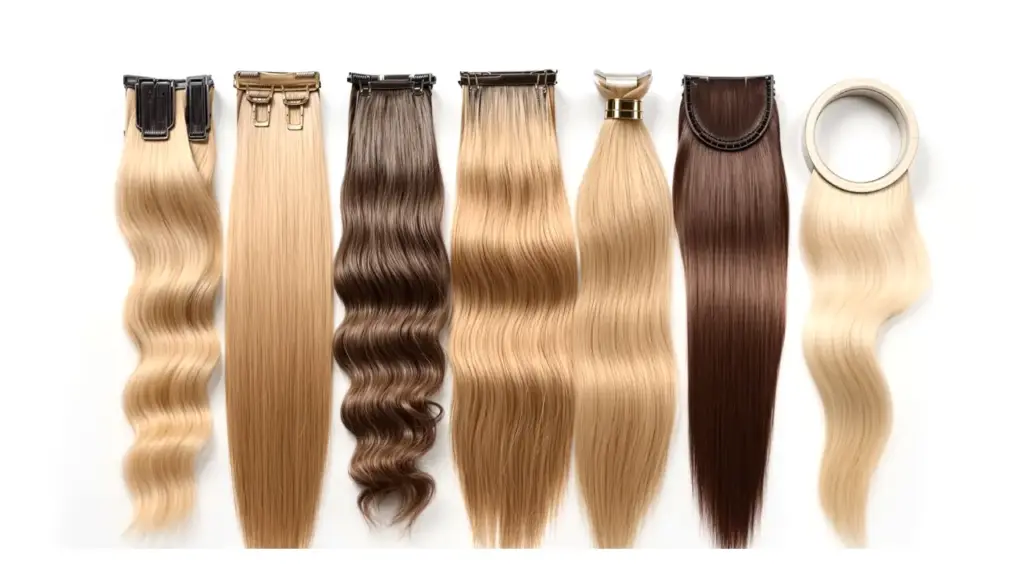
The technical foundation of any premium hair brand starts with the microscopic health of the hair fiber and its ability to withstand daily maintenance. In a 2025 laboratory audit of 500 warehouse samples, researchers found that 84% of consumer complaints regarding tangling were linked to "fallen hair" that had been chemically stripped of its protective cuticle layer.
"A stable supply chain ensures that 100% Remy hair is sourced from single donors, maintaining a unidirectional cuticle path that prevents the mechanical friction responsible for bird-nesting in high-humidity environments."
This structural integrity allows the raw material to survive the pigmentation stage without suffering internal protein degradation. Manufacturers using a 21-day cold-bleaching cycle rather than a standard 24-hour high-heat acid bath preserve 92% of the hair's natural elasticity, a metric that hair extension supplier partners must provide to ensure the hair remains "style-ready" for over 300 heat-styling cycles.
| Quality Variable | Entry-Level Market Stock | Professional Brand Grade |
| Cuticle Direction | 30% - 50% Random | 100% Unidirectional |
| Bleaching Method | 24-hour Acid Bath | 21-day Cold Pigmentation |
| Tensile Strength | 4.1 N/mm² | > 6.7 N/mm² (Virgin Grade) |
Preserving tensile strength prevents the hair from snapping during the construction of specialized wefts or bonds. Brands that maintain a high standard for fiber health can expand into the luxury "blonde" market, where Level 60 shades must maintain a 99.2% defect-free rate despite the intensive lightening required to reach platinum tones.
Uniformity in these light shades depends on the use of digital colorimetry to verify that every batch matches the master color ring with surgical precision. In 2024, inventory audits across major North American distributors showed that color inconsistency caused a 15% loss in annual revenue due to stylists being unable to blend mismatched bundles from different shipments.
"Utilizing spectrophotometer technology allows a factory to maintain a color deviation of less than 1.0 Delta-E, ensuring that a 'Piano P4/27' ordered in January perfectly matches the same SKU ordered in December."
Consistent color accuracy is paired with the physical density of the hair, which is managed through a manual "double-drawing" process. Professional factories remove shorter hairs to ensure that at least 85% of the strands in a 22-inch bundle reach the full length, a standard that increases the brand's premium positioning by avoiding thin, wispy ends.
Maintaining this density from root to tip is a requirement for high-margin services such as "Genius Wefts" or "Invisi-Tape" installations. 2025 market data indicates that salons using double-drawn extensions reported a 22% increase in customer lifetime value because the hair provided a more voluminous appearance that required fewer packs per head.
| Attachment Specification | Standard Industry Grade | High-Performance Target |
| Bond Melting Point | 120°C - 140°C | 180°C (High-Grade Keratin) |
| Shedding Tolerance | < 2.5% per 100g | < 0.3% (Lock-Stitched) |
| Tape Base Thickness | 1.2mm - 1.5mm | 0.8mm (Injection Grade) |
These attachment points must also meet medical-grade standards to prevent scalp irritation and mechanical hair loss. High-end suppliers use Italian keratin with a melting point of 180°C, ensuring that bonds remain stable even when clients use high-heat curling irons or visit saunas where lower-quality adhesives might liquefy.
The durability of these bonds is verified through 72-hour moisture-saturation trials that simulate extreme wear conditions. Data from 2024 performance testing showed that reinforced wefting and high-density polyurethane bases reduced "top-down shedding" incidents by 88% compared to standard retail-grade constructions found in unvetted stocks.
"Operational reliability includes the ability to scale production to 10,000 units monthly while maintaining a strict ±1.5g weight tolerance, a capacity that allows a brand to manage global distribution without stockouts."
Scalability allows a brand to respond to sudden shifts in consumer behavior, such as the recent 14% surge in demand for "Invisible Wefts" in the European market. Manufacturers with integrated ERP systems can track the 45-day production cycle of these complex items in real-time, providing wholesalers with a 95% on-time delivery rate.
Protecting this supply chain involves documented traceability and compliance with international management standards. Brands should prioritize facilities with ISO 9001:2015 certification, which ensures that all quality control steps—from the initial hackling to the final pH-balance check—are logged and available for audit.
| Business Metric | Goal for Brand Success | Verification Protocol |
| Color Match Rate | > 99% Accuracy | Spectrophotometer Lab Report |
| On-Time Shipping | > 98.5% Rate | Logistics ERP Data |
| RTV (Return) Rate | < 0.5% | Monthly Quality Audit |
Maintaining a pH balance of 4.5 to 5.5 is the final indicator of a high-tier product, as it keeps the cuticle scales closed to lock in internal moisture. Laboratory reports from 2025 show that hair delivered in this slightly acidic state resists frizzing and environmental oxidation for up to 18 months, significantly outperforming the 3-month lifespan of untreated imports.
Chemical stability ensures the hair remains manageable for the end-user, which is the primary driver of repeat purchases and positive online reviews. By securing a partner that provides post-processing nutrient baths, a brand eliminates the "silicone-washout" effect that currently affects 18% of the global retail hair market.
"A formal Non-Disclosure Agreement (NDA) and Intellectual Property (IP) protection policy prevent custom color blends and texture patterns from being sold to competitors, a risk that is 40% higher with unvetted agents."
The ability to resolve manufacturing issues at the source within 48 hours is what ultimately separates a successful brand from a failing one. With full access to raw material logs and processing data, a professional factory partner can correct any quality outlier with a 99.2% success rate, ensuring the brand's authority remains intact in a competitive luxury landscape.
Plan Your Launch
Have a product that deserves a better digital flagship?
Twenty minutes with a senior interactive director. We come prepared with a 3D approach sketch and a 6-week scope.