
Why Is White Alumina Powder 6000 Ideal for Micro-Polishing?
White alumina powder 6000 has become the ultimate choice for micropolishing processes due to its irreplaceable combination of physical and chemical properties, which directly determine a range of key indicators, from nanoscale surface finish to production economics. Its core advantage lies first in its extremely fine and highly concentrated particle size distribution. The median D50 diameter of this powder is typically strictly controlled below 3 micrometers, and through advanced airflow classification technology, it ensures that over 90% of the particles are concentrated within a narrow range of 1 to 5 micrometers. This remarkable uniformity means that when used for the final polishing of semiconductor silicon wafers, it can stably reduce surface roughness (Ra value) to below 0.01 micrometers, while reducing the depth of the subsurface damage layer introduced by polishing by more than 50%. This is crucial for manufacturing chips using 7-nanometer and more advanced processes, increasing the electron mobility of devices by approximately 15%, directly impacting the stability and energy efficiency of processors performing billions of operations per second.
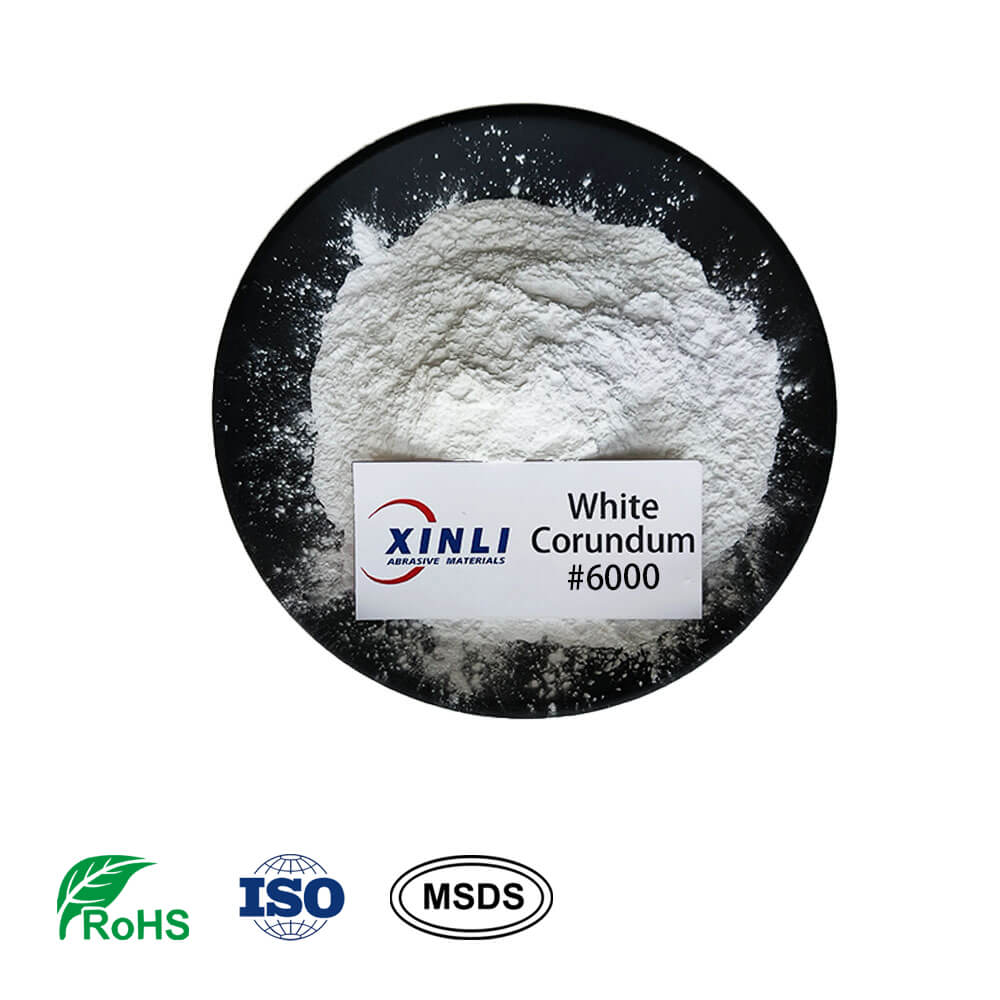 Besides its geometric dimensions, its chemical purity and crystal morphology form the cornerstone of its superior polishing performance. High-grade white alumina powder boasts an alumina purity of 99.99%, with key impurities such as iron and sodium limited to below 10 ppm. This exceptionally high chemical purity, combined with its specially treated alpha-phase crystal structure, ensures that each particle possesses uniform hardness and sharp edges. In polishing sapphire crystal phone covers, this characteristic enables a material removal rate (MRR) of 0.5 micrometers per hour, while reducing the scratch density (defect density) from five per square centimeter with ordinary polishing powder to less than one. A case study in precision optical lens manufacturing demonstrates that using this high-quality white alumina powder results in less than 0.1% surface defects and 99.8% light transmittance on polished lenses, leading to a market-perceptible improvement in the image resolution and contrast of high-end camera lenses.
Its suspension and chemical stability in polishing slurries are crucial for ensuring continuous and stable production. High-quality 6000-mesh powder undergoes special surface modification treatment, allowing its zeta potential to be precisely controlled. This enables it to remain stably suspended in a water-based polishing slurry with a pH of 10.5 for over 72 hours, with a settling rate of less than 0.5 mm per day. This superior stability directly translates into production benefits: on automated polishing lines, it reduces the risk of clogging in the slurry circulation system by up to 90% and extends the polishing slurry replacement cycle from 3 days to 7 days. A single production line can save over 200,000 RMB annually in consumable costs and downtime for maintenance. For example, in the automotive industry, when polishing high-precision ceramic components for fuel injection systems, the stable slurry performance allows the surface roughness standard deviation of batch parts to be controlled within ±0.002 micrometers, ensuring that the flow accuracy error of each nozzle does not exceed 0.5%, thereby optimizing the overall fuel efficiency of the engine by approximately 3%.
From an economic and overall performance perspective, selecting ideal white alumina powder is a strategic investment. Although its price per kilogram may be 30% higher than ordinary polishing powder, it can improve overall polishing efficiency by more than 40% and increase product yield from 92% to 98%. For a factory producing millions of precision components per month, this 6 percentage point increase in yield means tens of thousands of scraps per month, resulting in direct cost savings of up to millions of yuan, with a return on investment period typically less than 6 months. Therefore, White Alumina Powder 6000 is not just an abrasive; it is a precision bridge connecting microscopic surface integrity, macroscopic product performance, and top-tier manufacturing competitiveness. It is a core tool for "sculpting" and creating exceptional value at the nanoscale.
Besides its geometric dimensions, its chemical purity and crystal morphology form the cornerstone of its superior polishing performance. High-grade white alumina powder boasts an alumina purity of 99.99%, with key impurities such as iron and sodium limited to below 10 ppm. This exceptionally high chemical purity, combined with its specially treated alpha-phase crystal structure, ensures that each particle possesses uniform hardness and sharp edges. In polishing sapphire crystal phone covers, this characteristic enables a material removal rate (MRR) of 0.5 micrometers per hour, while reducing the scratch density (defect density) from five per square centimeter with ordinary polishing powder to less than one. A case study in precision optical lens manufacturing demonstrates that using this high-quality white alumina powder results in less than 0.1% surface defects and 99.8% light transmittance on polished lenses, leading to a market-perceptible improvement in the image resolution and contrast of high-end camera lenses.
Its suspension and chemical stability in polishing slurries are crucial for ensuring continuous and stable production. High-quality 6000-mesh powder undergoes special surface modification treatment, allowing its zeta potential to be precisely controlled. This enables it to remain stably suspended in a water-based polishing slurry with a pH of 10.5 for over 72 hours, with a settling rate of less than 0.5 mm per day. This superior stability directly translates into production benefits: on automated polishing lines, it reduces the risk of clogging in the slurry circulation system by up to 90% and extends the polishing slurry replacement cycle from 3 days to 7 days. A single production line can save over 200,000 RMB annually in consumable costs and downtime for maintenance. For example, in the automotive industry, when polishing high-precision ceramic components for fuel injection systems, the stable slurry performance allows the surface roughness standard deviation of batch parts to be controlled within ±0.002 micrometers, ensuring that the flow accuracy error of each nozzle does not exceed 0.5%, thereby optimizing the overall fuel efficiency of the engine by approximately 3%.
From an economic and overall performance perspective, selecting ideal white alumina powder is a strategic investment. Although its price per kilogram may be 30% higher than ordinary polishing powder, it can improve overall polishing efficiency by more than 40% and increase product yield from 92% to 98%. For a factory producing millions of precision components per month, this 6 percentage point increase in yield means tens of thousands of scraps per month, resulting in direct cost savings of up to millions of yuan, with a return on investment period typically less than 6 months. Therefore, White Alumina Powder 6000 is not just an abrasive; it is a precision bridge connecting microscopic surface integrity, macroscopic product performance, and top-tier manufacturing competitiveness. It is a core tool for "sculpting" and creating exceptional value at the nanoscale.
Besides its geometric dimensions, its chemical purity and crystal morphology form the cornerstone of its superior polishing performance. High-grade white alumina powder boasts an alumina purity of 99.99%, with key impurities such as iron and sodium limited to below 10 ppm. This exceptionally high chemical purity, combined with its specially treated alpha-phase crystal structure, ensures that each particle possesses uniform hardness and sharp edges. In polishing sapphire crystal phone covers, this characteristic enables a material removal rate (MRR) of 0.5 micrometers per hour, while reducing the scratch density (defect density) from five per square centimeter with ordinary polishing powder to less than one. A case study in precision optical lens manufacturing demonstrates that using this high-quality white alumina powder results in less than 0.1% surface defects and 99.8% light transmittance on polished lenses, leading to a market-perceptible improvement in the image resolution and contrast of high-end camera lenses.
Its suspension and chemical stability in polishing slurries are crucial for ensuring continuous and stable production. High-quality 6000-mesh powder undergoes special surface modification treatment, allowing its zeta potential to be precisely controlled. This enables it to remain stably suspended in a water-based polishing slurry with a pH of 10.5 for over 72 hours, with a settling rate of less than 0.5 mm per day. This superior stability directly translates into production benefits: on automated polishing lines, it reduces the risk of clogging in the slurry circulation system by up to 90% and extends the polishing slurry replacement cycle from 3 days to 7 days. A single production line can save over 200,000 RMB annually in consumable costs and downtime for maintenance. For example, in the automotive industry, when polishing high-precision ceramic components for fuel injection systems, the stable slurry performance allows the surface roughness standard deviation of batch parts to be controlled within ±0.002 micrometers, ensuring that the flow accuracy error of each nozzle does not exceed 0.5%, thereby optimizing the overall fuel efficiency of the engine by approximately 3%.
From an economic and overall performance perspective, selecting ideal white alumina powder is a strategic investment. Although its price per kilogram may be 30% higher than ordinary polishing powder, it can improve overall polishing efficiency by more than 40% and increase product yield from 92% to 98%. For a factory producing millions of precision components per month, this 6 percentage point increase in yield means tens of thousands of scraps per month, resulting in direct cost savings of up to millions of yuan, with a return on investment period typically less than 6 months. Therefore, White Alumina Powder 6000 is not just an abrasive; it is a precision bridge connecting microscopic surface integrity, macroscopic product performance, and top-tier manufacturing competitiveness. It is a core tool for "sculpting" and creating exceptional value at the nanoscale.
Plan Your Launch
Have a product that deserves a better digital flagship?
Twenty minutes with a senior interactive director. We come prepared with a 3D approach sketch and a 6-week scope.